🍎💳 [Korea] Does Apple Pay Work in Korea? What Travelers Really Need to Know

If you’re traveling to Korea and wondering,

“Can I survive with just Apple Pay?”

It’s a very reasonable question.
Korea feels cashless, fast, and highly digital — so Apple Pay should work.

But the reality is a bit different.

👉 Apple Pay works in Korea in very limited ways — and even most Koreans don’t rely on it.

This isn’t a tourist problem.
It’s how Korea’s payment system was built.


Can you use Apple Pay for payments in Korea?

Short answer: almost never.

Apple Pay only works through NFC (tap-to-pay).
The problem is that most Korean card terminals were never designed around NFC.

In daily life:

  • Physical credit cards → work almost everywhere
  • Apple Pay → often does nothing when you tap

This happens not only to tourists, but also to locals.
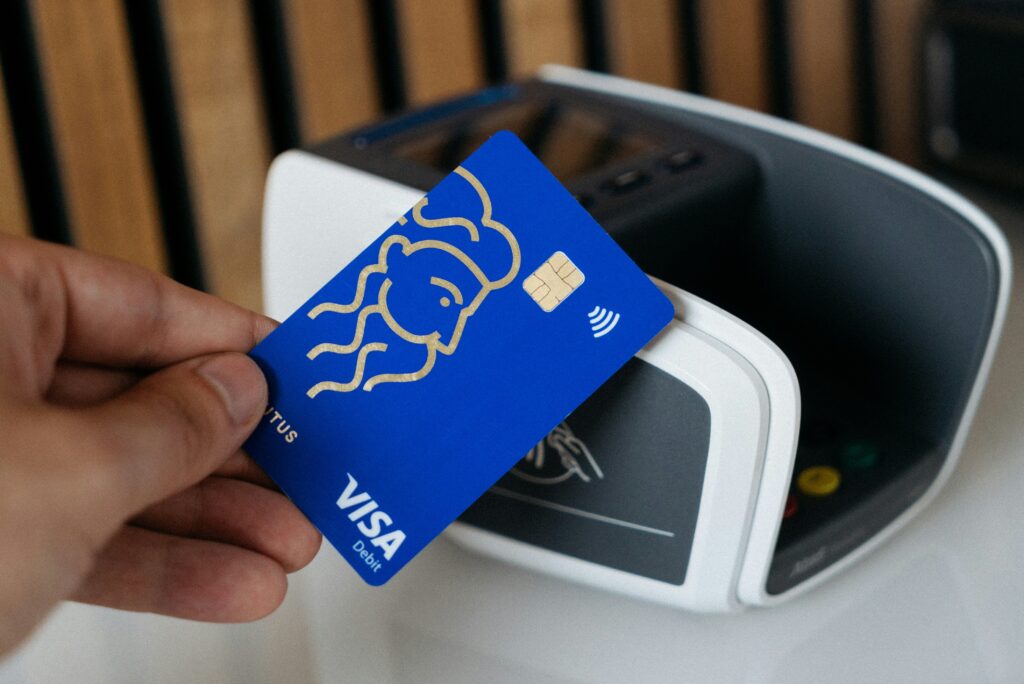
Photo by CardMapr.nl on Unsplash

You’ll often see modern-looking card machines,
but they still rely on chip insertion or swipe — not NFC.


Why Apple Pay doesn’t really work (even for Koreans)

This isn’t because Apple Pay is “new” in Korea.
It’s because Korea never needed it.

1. Korea already had a perfect card system

Long before mobile payments:

  • Credit cards were accepted almost everywhere
  • Payments were fast and reliable
  • Offline transactions worked smoothly

From a store’s perspective, there was no strong reason to switch to NFC.

2. Samsung Pay filled the gap first

Samsung Pay became dominant in Korea because it supports
MST (Magnetic Secure Transmission) — it mimics a card swipe.
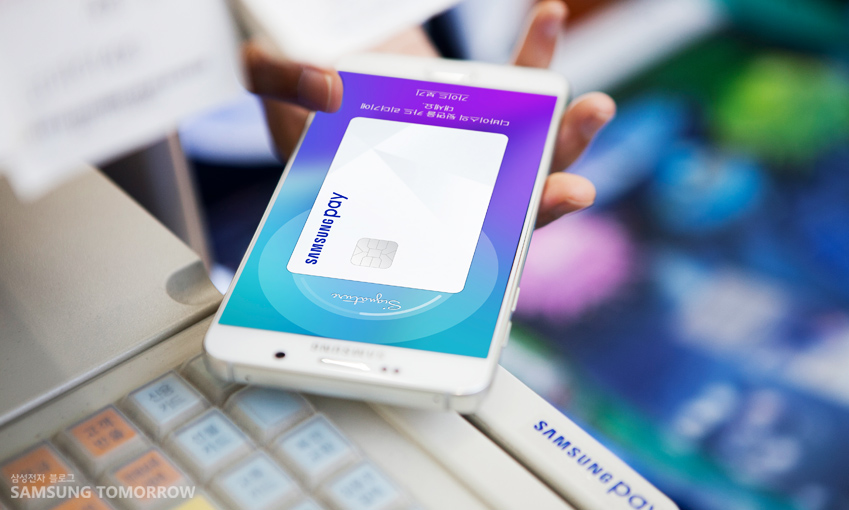
Photo crecit: Samsung Blog – Samsung Tomorrow

That means:

  • Works on old terminals
  • No hardware upgrades
  • Accepted almost everywhere

So for locals:

  • Samsung Pay works
  • Physical cards work

Apple Pay didn’t add anything essential.


What about Apple Pay + T-money?

This is where many travelers get confused — and where expectations need adjusting.

Yes, foreigners can add T-money to Apple Wallet

This part is true:

  • Foreign travelers can add T-money to Apple Wallet
  • No Korean ID or phone number required

The real limitation is recharging

In real use:

  • Recharge with overseas card ❌
  • Recharge with Korean card ❌
  • Cash top-up at convenience stores ⭕

Once you top up with cash:

  • Subway and buses work without issues
  • Gates recognize Apple Pay T-money instantly
  • Real-time balance updates work properly
https://pimg.mk.co.kr/news/cms/202507/22/news-p.v1.20250722.2afa560129c14dfba90ab983c80b026f_P1.png
Photo crecit: pay.tmoney.co.kr

So technically:
👉 Apple Pay T-money works for transportation — but only after cash top-ups.

Apple Pay alone is still not enough.


Can Apple Pay replace everything in Korea?

No — and this is the key takeaway.

What Apple Pay can do:

  • Act as a digital T-money card (with cash top-ups)

What it cannot reliably do:

  • Pay at restaurants
  • Pay at cafes
  • Replace physical credit cards

This is normal in Korea.
Most Koreans still use physical cards or Samsung Pay.


The most realistic setup for travelers

If you want a smooth trip, this combination works best:

  • Physical credit card (Visa / Mastercard) → main payments
  • Small amount of cash → T-money top-ups, markets
  • Apple Pay T-money → transportation only

Trying to go “Apple Pay only” will almost always lead to frustration.


Final takeaway

Korea isn’t anti–Apple Pay.
It’s just built differently.

  • Cards work better than phones
  • NFC was never essential
  • Older systems still work extremely well

One honest sentence to remember:

Apple Pay works in Korea in theory — but physical cards and cash still do the real work.

[Korea] Card vs Cash in Korea: What’s Actually Easier for Travelers?

If you’re planning a trip to South Korea, there’s one question almost everyone asks:

“Should I bring cash, or can I just use my card?”

Good news first:
👉 Korea is one of the most card-friendly countries in Asia.

But the real answer isn’t “card only” or “cash only.”
It’s a smart mix of both. Let me break it down in a simple, no-stress way.


Photo Credit: Toss place

Can you use credit cards in Korea?

Short answer: Yes. Almost everywhere.

In big cities like Seoul, Busan, or Incheon, credit cards are basically the default payment method.

You can use cards at:

  • Cafes and restaurants ☕
  • Convenience stores (GS25, CU, 7-Eleven)
  • Shopping malls & department stores
  • Hotels and tourist attractions
  • Taxis (especially in cities)

Most places accept:

  • Visa
  • Mastercard
  • American Express (AMEX)

As long as your card works overseas, you’ll be totally fine for daily spending.


What about card fees? Will I notice them?

This is where travelers sometimes hesitate.

Most foreign cards charge:

  • 1–3% foreign transaction fee

In reality?

  • Coffee, meals, shopping → small fees, not a big deal
  • You probably won’t notice unless you’re tracking every dollar

Real-life tip:
👉 Cards are still worth it for convenience. Just don’t stress over tiny fees.


When do you actually need cash in Korea?

Photo by Mike Swigunski on Unsplash

Even in a high-tech country, cash still matters sometimes.

You’ll want cash for:

  • Traditional markets (like Gwangjang Market)
  • Street food stalls
  • Small local shops
  • Rural areas or smaller towns
  • Coin lockers or donation boxes (temples, churches)

How much cash is enough?
👉 ₩50,000–₩100,000 (about $40–80 USD) is more than enough for most trips.

No need to carry a lot. Just a backup.


Don’t forget transportation: get a T-money card

One thing travelers often miss: transportation payments.

In Korea, everyone uses a T-money card (교통카드) for:

  • Subway
  • Buses
  • Some taxis
  • Convenience store purchases

You can buy it at:

  • Convenience stores
  • Subway stations
  • Airports

You can reload it with cash, so having a little cash helps here too.


https://blog.trazy.com/wp-content/uploads/2016/07/t-money-card-blog-1.jpg
Photo Credit: newsis.com

So… card or cash? What’s the best choice?

Here’s the honest, traveler-approved setup:

  • Credit card → main payment method
  • Small amount of cash → backup for markets & street food
  • T-money card → essential for getting around

One-line summary:
👉 Korea is extremely card-friendly, but a little cash makes travel smoother.


Final tip for first-time visitors

If you’re visiting Korea for the first time, don’t overthink money.

Bring your card.
Withdraw or exchange a small amount of cash.
Enjoy the food, shopping, and transport without stress.

That’s really all you need. 🇰🇷✨

신혼여행 어디로 갈까? :: 요즘 많이 선택하는 인기 여행지 정리✈️💍

결혼식 날짜를 잡고 나면
꼭 한 번은 듣게 되는 질문이 있어요.

“신혼여행은 어디로 가요?” ✈️

아직 정해진 건 없는데
괜히 다들 먼저 궁금해하는 그 질문.
그래서 이 글에서는
👉 결혼을 준비하는 커플들이 자연스럽게 많이 선택해 온 신혼여행지들을 가볍게 정리해봤어요.


🌴 발리 (발리)

The beautiful Diamond Beach in Penida Island, Bali, Indonesia

발리는 오랫동안
가성비 좋은 신혼여행지로 꾸준히 선택되고 있습니다.

선호 이유

  • 독채 풀빌라 숙소 선택 폭이 넓음
  • 휴양 + 관광을 함께 즐길 수 있음
  • 일정과 예산을 비교적 유연하게 조절 가능

보통

  • 4~6박 일정
  • 휴식 위주 + 중간에 가벼운 외부 일정
    으로 계획하는 경우가 많습니다.


🌺 하와이 (하와이)

Photo by Sebastien Gabriel on Unsplash

하와이는
휴양과 관광의 균형이 가장 안정적인 신혼여행지로 평가됩니다.

선택 이유

  • 자연, 쇼핑, 액티비티 모두 가능
  • 렌터카 기반 자유여행 시스템이 잘 갖춰짐
  • 치안·인프라 안정성

“완전 휴양은 답답하고,
너무 빡센 일정도 싫다”는 커플에게 자주 선택됩니다.


🏝 몰디브 (몰디브)

Photo by Mike Swigunski on Unsplash

몰디브는 여전히
‘신혼여행 전용지’에 가장 가까운 여행지입니다.

특징

  • 섬 하나 = 리조트 하나 구조
  • 외부 이동 거의 없음
  • 프라이빗한 휴식에 최적화

대부분

  • 올 인클루시브 리조트
  • 리조트 내에서 일정 소화
    하는 방식으로 선택됩니다.


🇪🇺 유럽 (이탈리아·프랑스 중심)

Photo by Dan Novac on Unsplash

유럽은
휴양보다 ‘경험’을 중시하는 신혼부부가 선택하는 지역입니다.

많이 선택되는 이유

  • 도시 자체가 신혼여행 콘셉트
  • 사진·미식·문화 경험
  • “결혼 아니면 미루게 되는 여행”

다만

  • 이동 많음
  • 체력 소모 큼
    → 일정 여유가 있는 경우에 적합합니다.


🇯🇵 일본 (오키나와 · 홋카이도)

Photo by Roméo A. on Unsplash

일본은
짧은 일정 + 안정적인 만족도로 선택되는 신혼여행지입니다.

선호 이유

  • 비행 시간 짧음
  • 음식·숙소 만족도 높음
  • 일정 부담 적음

장기 휴가가 어려운 커플이나
장거리 이동이 부담되는 경우 많이 선택됩니다.


마무리하며 💍

신혼여행이 특별한 이유는
어디로 가느냐보다,
👉 일정과 예산을 전부 둘이 함께 결정하는 여행이라는 점에 있는 것 같아요.

그래서 많은 커플들이
완전히 새로운 선택보다는
이미 여러 번 선택돼 검증된 여행지들 중에서
우리에게 가장 편한 곳을 고릅니다.

이 글은 그런 선택지를 가볍게 정리한 참고용 리스트예요 🙂